GRIDSERVE — Building trust into one of the UK's fastest-growing EV charging networks.

/Impact

50k+ downloads  ·  4.8★ App Store rating  ·  Delivered in under six months

/Role

Lead Product Designer — sole designer from discovery through to launch, covering UX, UI, prototyping, field research and engineering handover.

/Focus

Native Mobile  ·  Product Design  ·  UX  ·  Design Strategy  ·  Design System

A native iOS and Android app designed to make EV charging feel simple, transparent and trustworthy — from charger discovery through to digital receipt.

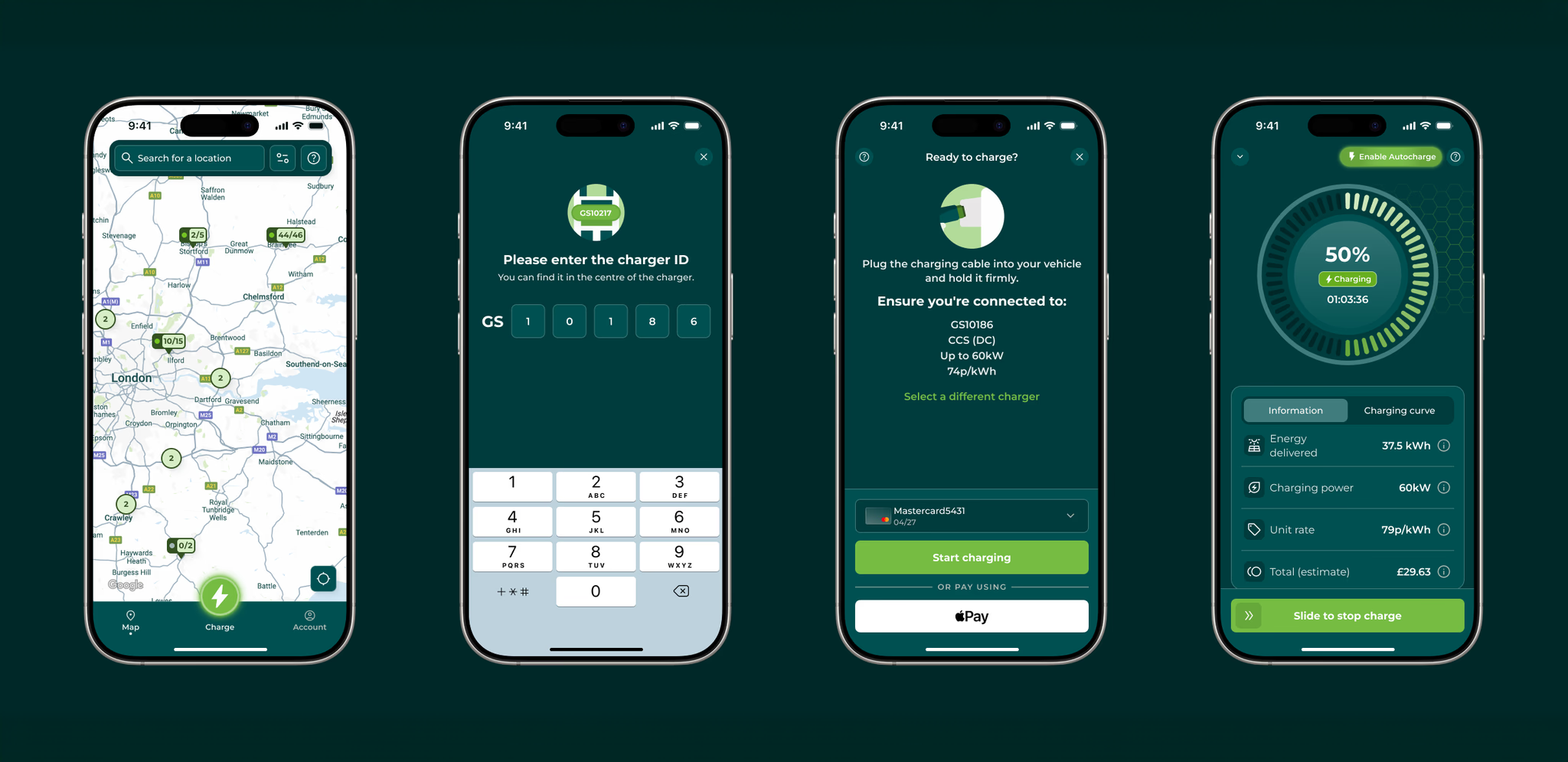
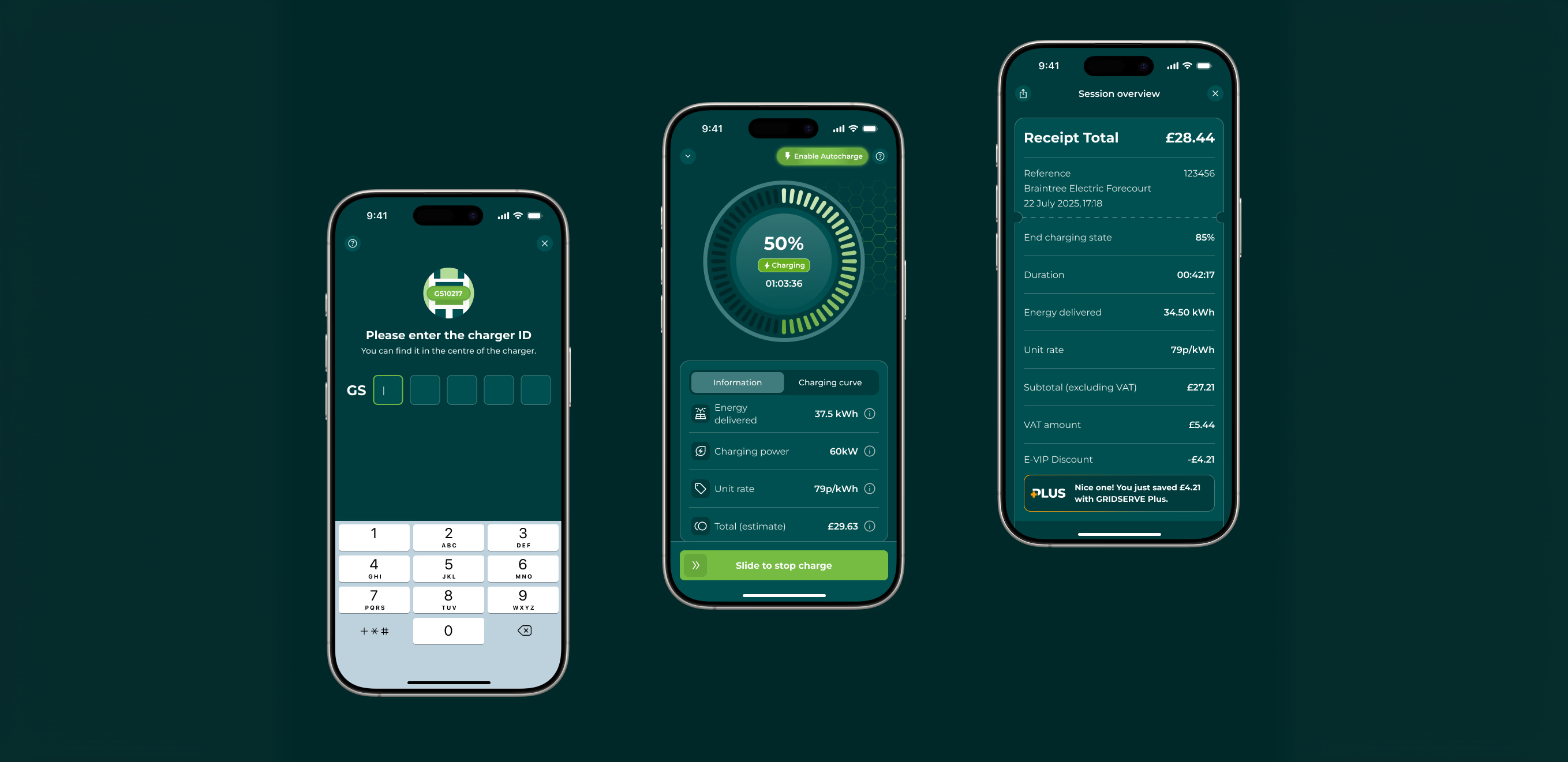
Session flow and live charging screen — two of the three core journeys delivered at launch.

GRIDSERVE mobile app

The end-to-end app — Find, Charge, Pay.

GRIDSERVE was growing rapidly — adding charging sites, customers and infrastructure — but drivers had no reliable way to navigate the network or trust that sessions would work. I led the end-to-end design of the native app as the sole designer, from brief to launch and beyond.

EV charging is a trust problem. Drivers — especially those new to electric vehicles — approach each session with low confidence. They're unsure whether the charger will work, what they'll pay, and what to do if something goes wrong. The real design problem wasn't the feature list. It was the anxiety.

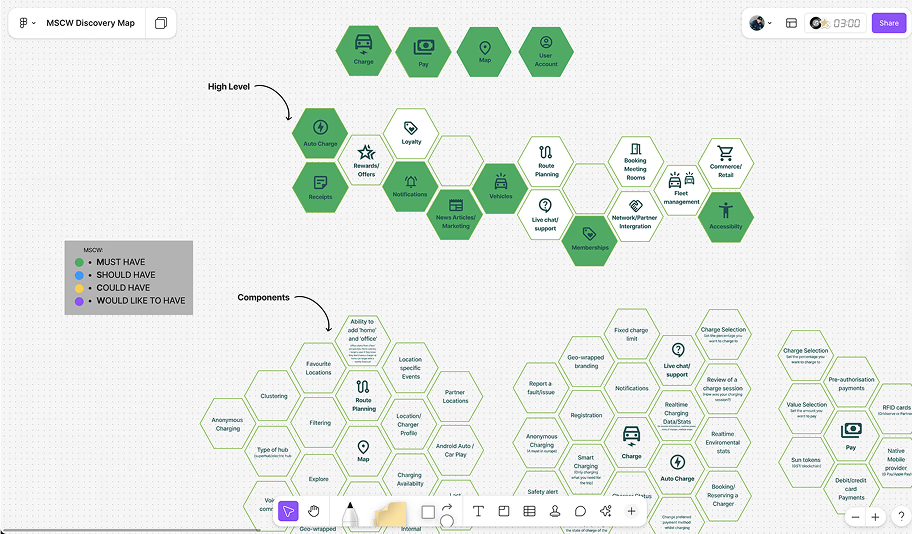
Requirements workshop with the GRIDSERVE team

Requirements workshop with the GRIDSERVE product team.

Charging confidence

Drivers could find a charger, start a session and pay without friction or uncertainty.

App adoption

50,000+ downloads and a 4.8★ App Store rating within the first year of launch.

Speed to market

Designed and shipped in under six months from brief to App Store.

Scalable foundation

Design patterns that supported the team's ongoing development long after launch.

Customers don't need more charging information. They need confidence that everything is working.

/01

Design the app around the charging journey

The app wasn't there to replace the charger. It needed to support the entire charging experience, from finding a charger to leaving the site with confidence.

The product was designed around three core moments: finding a charger, starting a session and understanding charging progress. Keeping those journeys simple created a strong foundation that future features could build on.

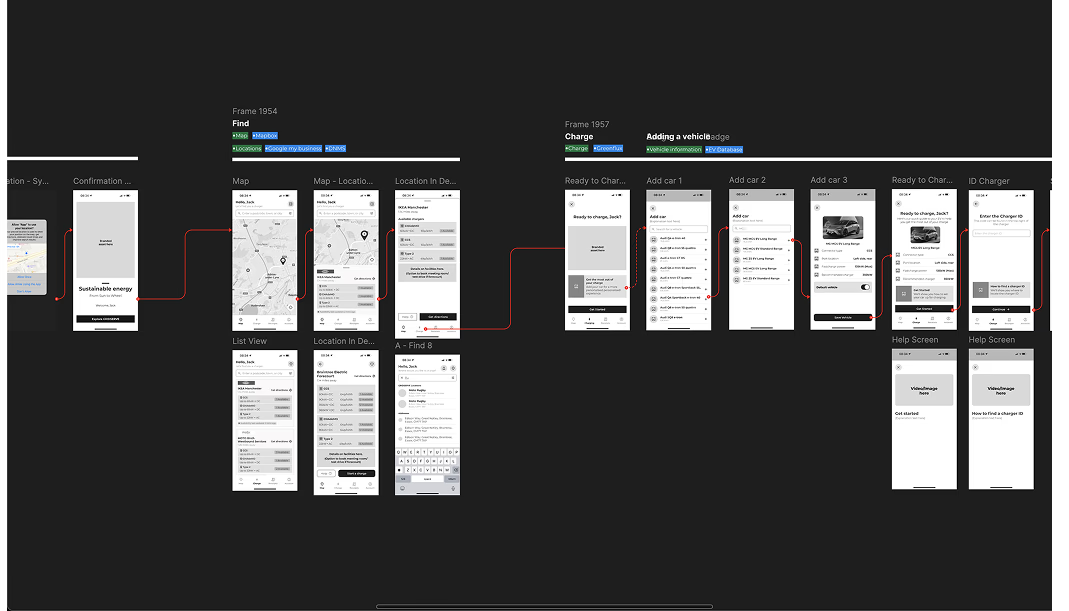
Journey wireframes defining core charging flows

Early journey mapping used to define the core charging experience before expanding the wider product.

/Why this mattered
  • Clearer end-to-end experience
  • Reduced friction at key moments
  • Strong foundation for future features
/02

Turn charging data into customer confidence

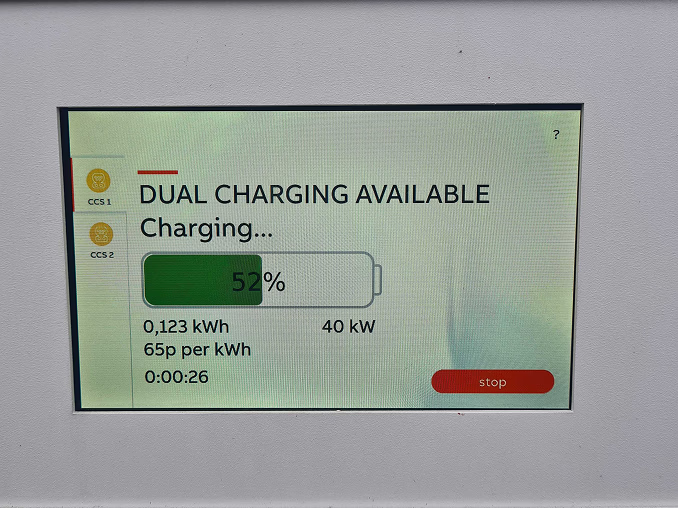
Once a charging session had started, the physical charger offered only limited feedback. If something went wrong, drivers often had no easy way to understand what had happened or monitor progress remotely.

Rather than surfacing every available technical metric in the app, I focused on the information drivers actually needed: whether charging had started, how it was progressing and when it would finish. The result was a clearer, more reassuring experience that complemented the physical charger rather than duplicating it.

Session dial and charging flow screens

The physical charger provided only basic session feedback. The app extended that experience, giving drivers a clearer view of charging status wherever they were.

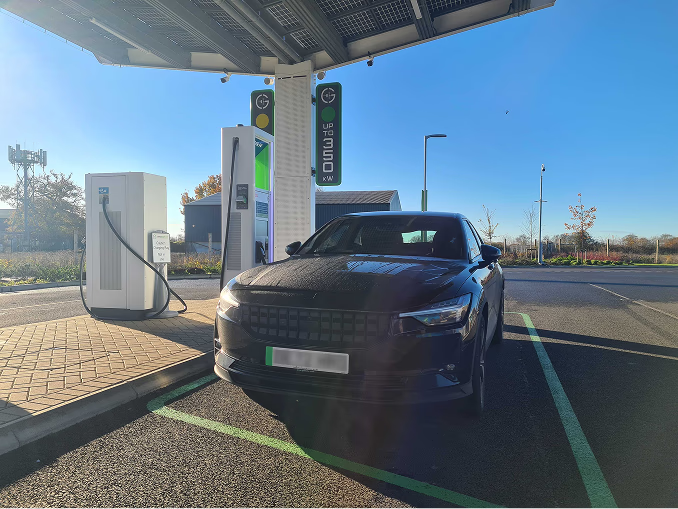
Field research at a live GRIDSERVE charging site

Field research at a live GRIDSERVE site — understanding what drivers actually needed from the physical charging experience.

/Looking back

This was the point where I realised customers weren't asking for more charging data. They were asking for reassurance. That insight has shaped how I approach complex products ever since.

/03

Build for the wider ownership journey

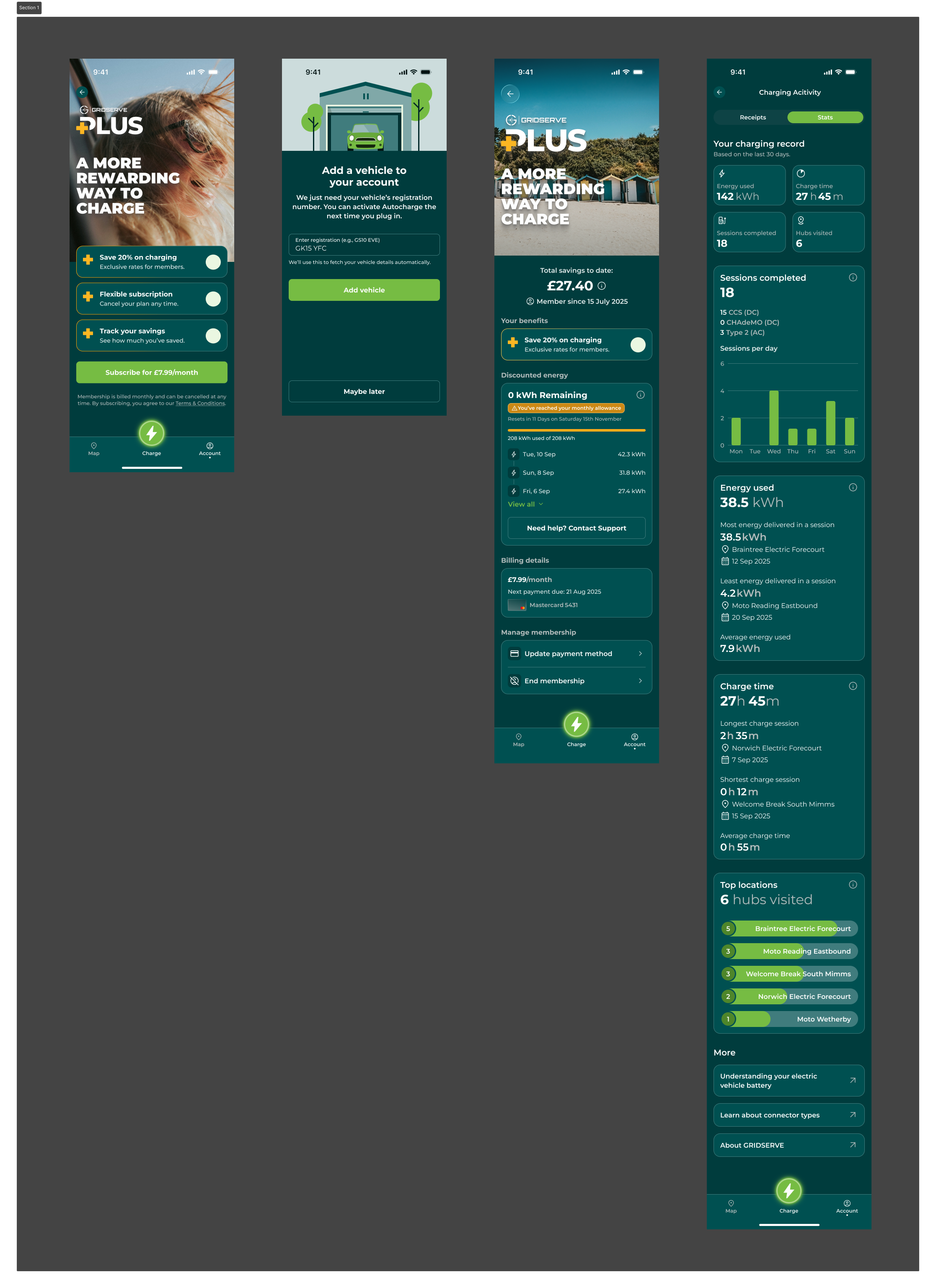
Charging was only one part of the relationship customers had with GRIDSERVE. The app was designed as a platform that could grow to support memberships, Autocharge, charging history and future services, rather than remaining a transactional utility.

Early concepts for the wider ownership journey

Early concepts showing how the app could evolve beyond charging into a broader ownership experience.

/Why this mattered
  • Increased long-term engagement
  • Supported future commercial features
  • Scalable product foundation
End-to-end charging journey

The end-to-end charging journey, from charger discovery to digital receipt.

/Customer

Drivers gained a clear way to charge, pay and monitor sessions from a single app. Early reviews consistently cited confidence and clarity as the reason they kept using it.

/Business

50,000+ downloads and a 4.8-star rating, delivered in under six months. The app created GRIDSERVE's first direct digital relationship with its customers.

/Team

The Figma conventions and design patterns I put in place gave the team a shared foundation that supported delivery long after the initial contract ended.

This project shaped how I think about trust as a design outcome. Trust isn't a feature — it's the cumulative result of every interaction telling a customer: this is working, you are in control.

The decision I'm proudest of wasn't a screen. It was insisting on field research before we designed anything. Seeing real customers — anxious, time-pressured, unsure — gave the team a shared picture of what we were actually building for. Every decision after that was more deliberate because of it.

Trust is designed long before something goes wrong.